

Book Summary: The Four Agreements: A Practical Guide to Freedom, Awareness, and Inner Peace
A clear, practical breakdown of The Four Agreements by Don Miguel Ruiz—covering the four core principles, deeper themes, and powerful quotes on awareness, freedom, forgiveness, and living your best life.
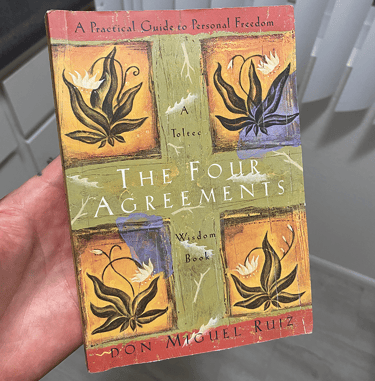
The Four Agreements by Don Miguel Ruiz is a timeless guide to personal freedom, rooted in ancient Toltec wisdom and made practical for modern life.
At its core, the book offers four simple—but deeply transformative—agreements we can make with ourselves. When practiced consistently, these agreements help us break unconscious patterns, reduce emotional suffering, and live with greater authenticity, peace, and love.
The Four Agreements (At a Glance)
1. Be Impeccable With Your Word
Use your words with integrity. Speak truthfully. Avoid using words to harm yourself or others. Your word has creative power—use it to build, not destroy.
2. Don’t Take Anything Personally
Nothing others say or do is truly about you. What people express is a reflection of their own beliefs, wounds, and conditioning—not your worth.
3. Don’t Make Assumptions
Assumptions lead to misunderstandings, conflict, and unnecessary suffering. Ask questions. Communicate clearly. Seek truth instead of guessing.
4. Always Do Your Best
Your best will change from moment to moment. When you do your best—given your current energy, awareness, and circumstances—you free yourself from self-judgment, guilt, and regret.
The Deeper Themes of The Four Agreements
Beyond the four principles, the book explores powerful themes that shape how we experience life:
Awareness vs. unconscious conditioning
Freedom from fear, shame, and self-rejection
The power of choice and intention
Living in the present moment
Love without attachment
Forgiveness as a path to healing
Replacing limiting beliefs with life-giving agreements
Ruiz frames life as a “dream”—one shaped by beliefs, emotional agreements, and internal narratives. With awareness, we gain the power to change that dream.
Key Quotes & Reflections from The Four Agreements
Below are my highlighted quotes from the book that stood out to me:
Everything is God.
The smoke is the Dream, and the mirror is you, the dreamer.
We have learned to live by other people’s points of view because of the fear of not being accepted and of not being good enough for someone else.
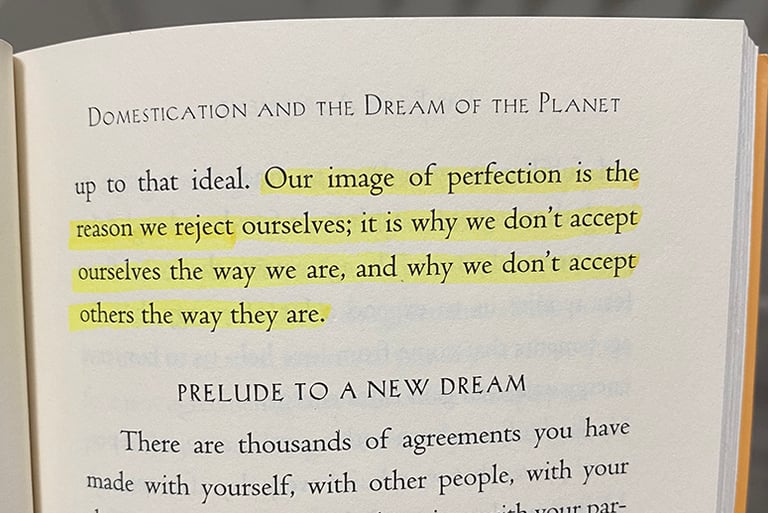
Our image of perfection is the reason we reject ourselves; it is why we don’t accept ourselves the way we are, and why we don’t accept others the way they are.
Being impeccable with your word is not using the word against yourself. When you send emotional poison outward, you are ultimately using your word against yourself.
Personal importance, or taking things personally, is the maximum expression of selfishness because we assume everything is about “me.”
Even when a situation seems personal, even if others insult you directly, it has nothing to do with you. Their words come from their own programming and belief systems.
Nothing others think about you is really about you—it is about them.
When you feel good, everything around you is good. Loving life begins with loving yourself and being content with who you are.
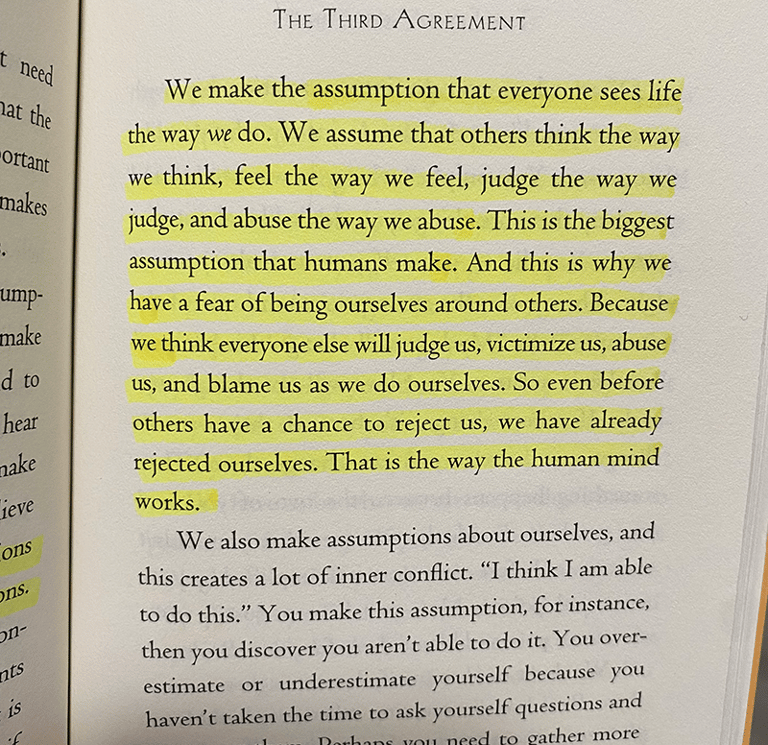
We make all sorts of assumptions because we don’t have the courage to ask questions.
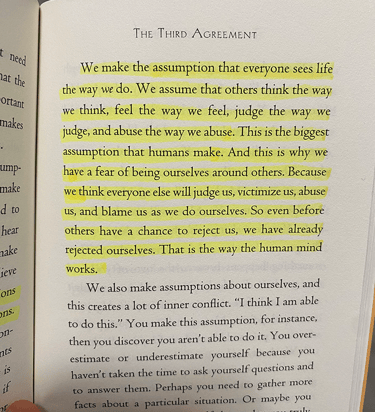
We assume others think, feel, judge, and even abuse the way we do. This is why we fear being ourselves—and why we reject ourselves before anyone else can.
We don’t need to justify love. Real love is accepting others as they are, without trying to change them.
Find someone whom you don’t have to change at all.
Make sure communication is clear. If you don’t understand, ask. Always have the right to ask.
With clear communication, relationships transform. When assumptions disappear, your word becomes impeccable.
Just do your best. When you do, there is no room for guilt, blame, or self-punishment.
The best way to say “I love you, God” is to live your life doing your best. The best way to say “thank you” is to live fully in the present moment.
Letting go of the past allows you to enjoy the dream happening now.
Not enjoying the present moment is living only half alive.
If you always do your best, over time, you become a master of transformation.
Action is what makes the difference.
Honor your body. Respect it, love it, care for it, and do what makes it feel good.
Keep your attention on today. Stay present.
Today is the beginning of a new dream.
The freedom we seek is the freedom to be ourselves and to express ourselves.
Awareness of the problem is the first step to solving it.
You can change your life anytime if you are not enjoying the dream.
Intent is life itself. Intent is unconditional love.
Only with awareness do we gain the power to transform our dream.
For every agreement that causes suffering, it must be replaced with a new agreement that brings happiness.
When a new agreement occupies the same space, the old one disappears.
The way you see the world depends on the emotions you are feeling.
Forgive not because others deserve it, but because you love yourself enough to stop paying for the injustice.
Forgiveness is the only way to heal.
It is emotion that controls human behavior—not the other way around.
Victims repress emotions out of fear. To refrain is different: it is expressing emotions at the right time, not suppressing them.
Loving openly matters, regardless of whether love is returned. What matters is expressing love while we are here.
Final Takeaway
The Four Agreements is not about perfection—it’s about awareness, choice, and practice. Each agreement invites you to break unconscious patterns and replace them with agreements rooted in truth, love, and freedom.
When you change your agreements, you change your life.
And the best part?
You can begin again—today.
Reach out, let's chat
© 2025. All rights reserved.